Seamless eCommerce Transitions: How Yoma Onboards and Elevates Your Epicor Commerce & Magento Website
Transitioning your eCommerce store to a new agency can feel like a daunting task, especially when you are running a...
As we move through 2025, the global workwear industry continues to experience strong momentum. With a projected annual growth rate of 6.1% through 2028, demand is accelerating across key sectors including healthcare, construction, hospitality, and mining.
Today’s workwear is about more than just durability – it must balance performance, comfort, compliance, visual appeal, and growing concerns around sustainability and innovation. Below, we break down the trends reshaping workwear this year – and how businesses are adapting.
The traditional focus on toughness and practicality is evolving. In 2025, employers and employees are looking for gear that delivers performance without sacrificing personal expression.
Modern workwear in industries like healthcare, retail, and construction now blends technical features with versatile, stylish designs – creating uniforms that support both movement and brand identity.
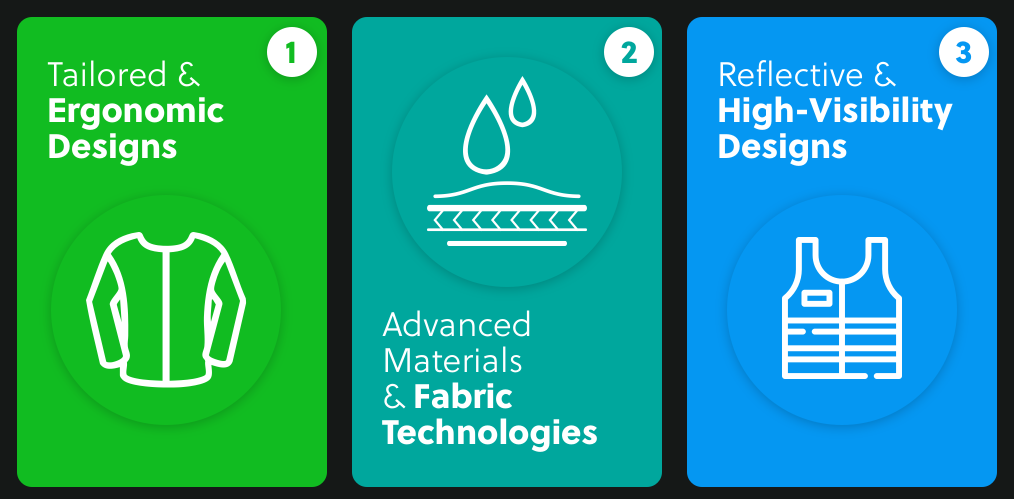
Poorly fitting uniforms are becoming a thing of the past. Workers increasingly expect tailored fits and ergonomic features that promote posture, freedom of movement, and all-day comfort.
Design enhancements such as stretch panels, reinforced joints, and breathable linings are now standard in high-performance gear – especially in physically demanding roles.
Fabric innovation is one of the biggest drivers of change in 2025. Workwear is now made with lightweight, moisture-wicking, odour-resistant materials that extend product life and improve wearer experience.
These high-tech fabrics not only enhance comfort but also reduce replacement frequency, cutting costs and waste.
Safety remains critical, but it’s getting a style upgrade. High-visibility clothing now features modern silhouettes, vibrant colours, and stylish reflective accents, offering protection without compromising aesthetics.
These enhancements are being applied across outerwear and PPE, helping workers remain visible and safe while looking professional.
Workplace safety regulations continue to evolve, and companies are responding with smarter, tech-enabled protective gear.
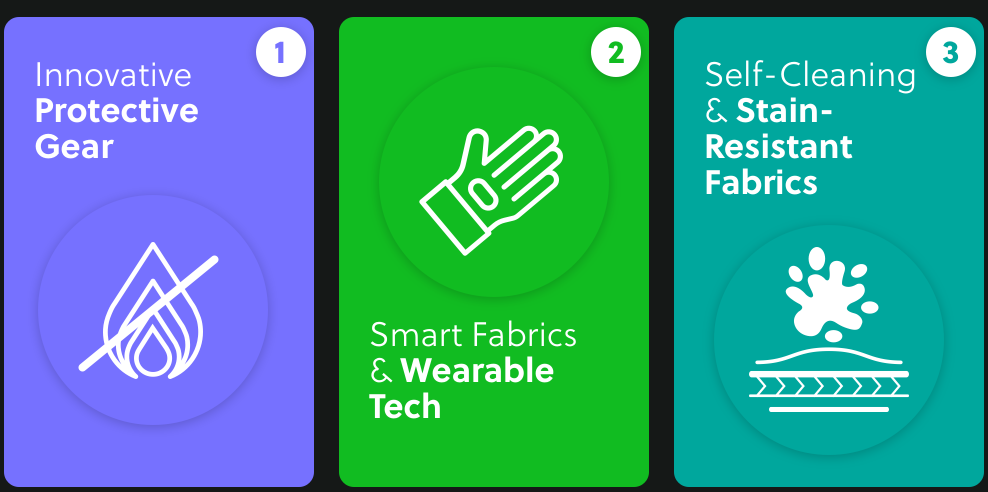
These technologies are not just about compliance – they’re actively preventing injuries and improving efficiency.
Advancements in nanotechnology are making self-cleaning and stain-resistant fabrics commercially viable. These garments resist dirt, odour, and wear, staying fresher longer and reducing laundering needs – a win for both cost and sustainability.
In 2025, workwear isn’t one-size-fits-all. Businesses are investing in custom-branded and fit-focused apparel that supports team unity while addressing individual needs.
Sustainability has moved from buzzword to business imperative. With environmental accountability becoming the norm, brands are embracing eco-friendly fabrics and circular economy practices.
Common strategies include:
While upfront costs may be higher, the long-term value – in savings and environmental impact – is undeniable.
The way workwear is bought and managed has changed dramatically. E-commerce is now the go-to channel, supported by user-friendly platforms and flexible purchasing options.

As the workwear industry evolves, success depends not just on great products – but on the digital strategies behind them. That’s where YOMA comes in.
We’re a full-service eCommerce and digital marketing agency specialising in helping workwear brands grow. From custom online stores to performance marketing and automation, we help you:
Whether you’re a manufacturer launching a new line or a distributor scaling online, we’re here to help you future-proof your brand.
Ready to take your workwear brand to the next level?
Let’s talk about how YOMA can support your growth in 2025 and beyond.
Share this article


Transitioning your eCommerce store to a new agency can feel like a daunting task, especially when you are running a...

If you run an Epicor Commerce (EC) store, you already know upgrades and patch releases are a necessary part of...

Google Is Retiring the Content API for Shopping Google has announced that the Content API for Shopping will be permanently...

It has been two weeks since we returned from Epicor Insights 2026 at the Gaylord Opryland Resort in Nashville. Having...
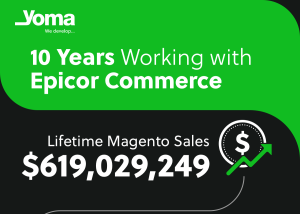
From there, the working relationship grew as ecommerce became more integral to the operations to Epicors customer base. Our largest...

Epicor Commerce is the ecommerce and customer portal solution for Epicor ERP. Giving your customers the ability to self serve...


Our full-service digital agency can help you realise your vision. No matter what your industry, we see your potential and can build eCommerce solutions that will grow and scale with you.